• Patients & Caregivers
  • Patient Organizations
  • For Clinicians & Researchers
  • NORD En español
  • Contact Us
NORD logo with tag for website.
  • Donate
  • Rare Disease News
  • Find a Rare Disease
  • About Us
  • Events
  • Understanding Rare Disease
        • Where to start
          • Rare Disease Facts and Statistics
          • NORD’s Rare Disease Database
          • Rare Disease Video Library
          • Help for People with Undiagnosed Medical Conditions
          • Find A Rare Disease Organization
          • Diagnóstico Raro en Niños: Una Guía para los Padres para Encontrar el Diagnóstico de una Enfermedad Rara
          • A PCP Primer to Diagnosing Rare Disease in Children
        • Stay informed
          • Stories That Inspire
          • RareEdu® – Online Learning Platform
          • Rare Disease Day®
          • Resource Library
          • State Resource Center
          • Publications On Rare Disease
        • Featured NORD Event
          • LRLS Thumbnail for rarediseases.orgNORD® Living Rare, Living Stronger® Patient & Family Meeting
          • Learn More
  • Living with a Rare Disease
        • Manage your care
          • Getting Help & Support
          • Managing Your Disease
          • Telemedicina – Para Pacientes y Cuidadores
        • We can help
          • How NORD Can Help
          • Speak To Someone at NORD
          • Rare Disease Centers Of Excellence
          • Patient Assistance Programs
          • Explore Clinical Trials
          • Find A Patient Organization
          • Caregiver Resources
        • Discover Local Resources
        • State-Resource-Cente
  • Community Support
      • Where to start
        • Rare Diseases Defined
        • Financial & Medical Assistance
        • Call Center & Information Services
        • Bringing Together Your Community
      • Mentoring organizations
        • NORD Member List
        • Start a Rare Disease Organization
        • Membership Program
        • Becoming Research Ready
        • Patient-Focused Drug Development
      • Improving clinical care
        • NORD Claim Your Care®
        • Rare Disease Centers of Excellence
        • Continuing Medical Education (CME)
      • Partnering with the community
        • Corporate Council
        • National Partnerships
        • Global Partnerships
        • Rare Cancer Coalition
        • NORD Rare Impact Awards®
      • Featured NORD Event
        • LRLS Thumbnail for rarediseases.orgNORD® Living Rare, Living Stronger® Patient & Family Meeting
        • Learn More
  • Advancing Research
      • For patients
        • List of Rare Diseases
        • Gene Therapy for Rare Disease
        • Find Clinical Trials & Research Studies
      • For researchers
        • Request for Proposals
        • Research Grant Programs
        • Data Standards for Rare Diseases
        • Patient-Focused Drug Development Meetings
      • For clinicians
        • Resources for Patients
        • Find a Rare Disease Care Center
        • Continuing Medical Education (CME)
      • Connect
        • IAMRARE® Program Powered by NORD
        • Rare Disease Cures Accelerator (RDCA-DAP)
        • All of Us Study
      • Featured NORD Event
        • Symposium thumbnailNORD Rare Disease Scientific Symposium
        • Learn More
  • Driving Policy
        • NORD policy and you
          • Public Policy Positions
          • Policy Statements & Letters to Policymakers
          • Rare Disease Advisory Councils
          • NORD State Report Card®
        • Taking action
          • Join the Rare Action Network®
          • Take Action
          • Advocate for Rare Disease Policies as a Health Care Professional
        • Join A Current Campaign.
          • NORD policy alert notification icon imageLearn about our current
            policy goals
          • Take Action
        • Featured NORD Event
        • Summit thumbnailNORD® Rare Diseases & Orphan Products Breakthrough Summit®
        • Learn More
  • Get Involved
      • Raising Awareness & Funds with NORD
        • Do-It-Yourself NORD Fundraiser
        • NORD Students for Rare®
        • Sports & Fitness Fundraisers
        • Media Inquiries
      • In your community
        • Attend An Upcoming Event
        • Find a Rare Disease Patient Organization
        • Stay Informed With NORD’s Email Newsletter
        • Rare Disease Day®
      • Patient stories
        • Share Your Story
        • Careers At NORD
        • Intern At NORD
        • Jobs At Patient Disease Organizations
      • Corporate Council
        • Corporate Council
        • Corporate Council Members
        • Join Corporate Council
        • Corporate Council – Code of Conduct
      • Show Your Support
        • Donate to NORD
        • Volunteer Application
        • Store
  • Donate
  • Understanding Rare Disease
    • Where to start
      • Rare Disease Facts and Statistics
      • NORD’s Rare Disease Database
      • Rare Disease Video Library
      • What It Means To Be Undiagnosed
      • Find A Rare Disease Organization
      • Diagnóstico Raro en Niños: Una Guía para los Padres para Encontrar el Diagnóstico de una Enfermedad Rara
      • A PCP Primer to Diagnosing Rare Disease in Children
    • Stay informed
      • Stories That Inspire
      • RareEdu® – Online Learning Platform
      • Rare Disease Day
      • Resource Library
      • State Resource Center – Find Local Resources
      • Publications On Rare Disease
    • NORD® Living Rare, Living Stronger® Patient & Family Meeting
      • Learn More
  • Living with a Rare Disease
    • Manage your care
      • Getting Help & Support
      • Managing Your Disease
    • We can help
      • How NORD Can Help
      • Speak To Someone at NORD
      • Rare Disease Center Of Excellence
      • Patient Assistance Programs
      • Explore Clinical Trials
      • Find A Patient Organization
      • Caregiver Resources
      • State Resource Center – Discover Local Resources
  • Community Support
    • Where to start
      • Rare Diseases Defined
      • Financial & Medical Assistance
      • Call Center & Information Services
      • Bringing Together Your Community
    • Mentoring organizations
      • NORD Member List
      • Start a Rare Disease Organization
      • Membership Program
      • Becoming Research Ready
      • Launching Registries & Natural History Studies
      • Patient-Focused Drug Development
    • Improving clinical care
      • Claim Your Care
      • Rare Disease Centers of Excellence
      • Continuing Medical Education (CME)
    • Partnering with the community
      • Corporate Council
      • National Partnerships
      • Global Parnerships
    • NORD® Living Rare, Living Stronger® Patient & Family Meeting
      • Learn More
  • Advancing Research
    • For patients
      • List of Rare Diseases
      • Gene Therapy for Rare Disease
      • Find Clinical Trials & Research Studies
    • For researchers
      • Request for Proposals
      • Research Grant Programs
      • Data Standards for Rare Diseases
    • For clinicians
      • Resources for Patients
      • Find a Rare Disease Care Center
      • Continuing Medical Education (CME)
    • Connect
      • IAMRARE® Program Powered by NORD
      • Rare Disease Cures Accelerator (RDCA-DAP)
      • All of Us Study
      • Add Your Expertise
    • NORD Rare Disease Scientific Symposium
      • Learn More
  • Driving Policy
    • NORD policy and you
      • Today’s Policy Issues
      • NORD’s Policy Statements
      • Rare Disease Advisory Councils
      • NORD State Report Card
    • Taking action
      • Join the Rare Action Network®
      • Contact your Representative
      • Take Action
      • Advocate for Rare Disease Policies as a Health Care Professional
    • Join A Current Campaign.
      • Learn about our current policy goals
  • Get Involved
    • Raising awareness and funds with NORD
      • Do-It-Yourself NORD Fundraiser
      • NORD Students for Rare
      • Sports & Fitness Fundraisers
      • Media Inquiries
    • In your community
      • Attend An Upcoming Event
      • Find a Rare Disease Patient Organization
      • Stay Informed With NORD’s Email Newsletter
      • Rare Disease Day®
    • Patient stories
      • Share Your Story
      • Careers At NORD
      • Intern At NORD
      • Jobs At Patient Disease Organizations
    • Show your support
      • Donate
      • Volunteer Application
      • Visit the NORD Store
  • Rare Disease News
  • Resource Library
  • About Us
  • For Clinicians & Researchers
  • For Patient Organizations
Home / Rare Disease Video Library / Essential Thrombocythemia

Related Videos

Von Hippel Lindau Disease

Watch Video

Median Arcuate Ligament Syndrome

Watch Video

Pulmonary Arterial Hypertension (Spanish)

Watch Video

Essential Thrombocythemia - Video


Overview

Summary

Essential thrombocythemia, or ET, is a rare blood condition. Most people with ET have a normal life expectancy, even when the disease is diagnosed at a younger age and is managed appropriately.

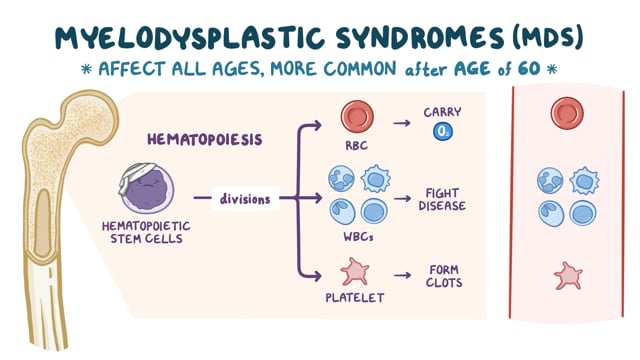
People with ET have an increased number of platelets in their blood. Platelets are the smallest of the three main types of circulating blood cells and play an important role in helping the blood clot after an injury. The other two types of blood cells are red blood cells, which carry oxygen to tissues throughout the body, and white blood cells, which help the body fight infections.

In ET, red blood cell and white blood cell numbers are generally normal.  All blood cell numbers are measured by a simple blood test, which counts the number of each type of blood cell separately. In addition, because the red cells comprise the bulk the blood cells in the circulation, they are also measured by calculating the percentage of the total volume of blood that the red cells occupy. This measurement is called the hematocrit, which indicates the percentage of the blood made up by red cells. Normally, the red cells occupy 38-45% of the circulating blood depending on whether the hematocrit is being measured in women or men; the rest of the blood volume consists of the plasma.  White blood cells and platelets are much smaller that red cells are normally present in much lower numbers and occupy a very tiny percentage of the blood volume.

It is important to know that most people who have a high platelet count do not have ET. Platelet counts can be elevated for many other reasons, including iron deficiency, infection, inflammation, other cancers, certain bone marrow conditions, or having had the spleen removed. Rarely, some inherited conditions can cause high platelet counts, which are usually harmless.

In ET, the focus is on distinguishing it from these other, more common causes of high platelets. Treatment focuses on relieving symptoms related to the elevated platelet count and reducing the risk of bleeding, since very high platelet counts are mainly associated with bleeding rather than blood clots in large blood vessels. Some doctors also consider reducing the risk of blood clots as part of overall care, particularly in patients who have other cardiovascular risk factors.

Introduction

ET is one of three blood conditions known as myeloproliferative neoplasms (MPNs). These conditions share certain features, including the overproduction of normal blood cells, red cells, white cells, and platelets, alone or in various combinations. They may also involve scarring in the bone marrow or an enlarged spleen.

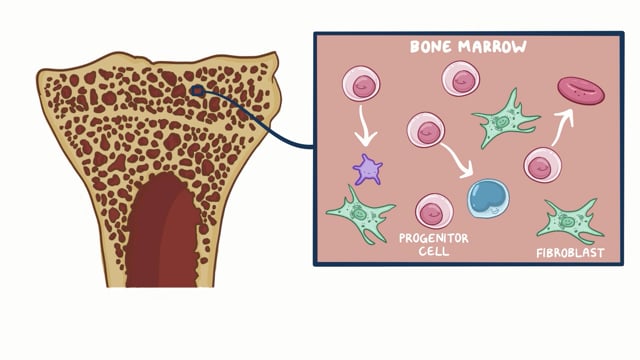
These shared features exist because all three MPNs are caused by specific genetic changes (called driver variants) in genes known as JAK2, CALR, and MPL. These variants arise in hematopoietic stem cells (HSCs), which are the cells in the bone marrow responsible for producing all blood cells. The variants are called “gain of function” because they cause the stem cells to produce too many normal blood cells. Although these conditions are called “neoplasms” (a term usually associated with cancer), the blood cells they produce are normal, they are simply made in excess.

The other two MPNs are polycythemia vera (PV), in which the body makes too many red blood cells, white blood cells, and platelets, and primary myelofibrosis (PMF), in which scarring develops in the bone marrow. Both ET and PV can develop some degree of bone marrow scarring over time, but it is usually milder than in PMF. Transformation to acute leukemia is uncommon in ET and PV unless the patient has been exposed to chemotherapy. The genetic changes involved in an ET transformation to AML are different from those seen in PMF.

For the adequate management of ET is essential to make sure that the diagnosis is correct, specifically to rule out polycythemia vera (PV), due to several reasons:

  • Both ET and PV can be caused by the same JAK2 gene variant, and both can cause high platelet counts, which can make them look similar.
  • PV can sometimes start with only a high platelet count, and it may take years before other signs of PV appear.
  • ET and PV behave differently and require different treatment approaches, so getting the right diagnosis is essential.
  • A helpful clue is that in true ET, the amount of the JAK2 variant in the blood (called the variant allele frequency, or VAF) is typically not greater than 50%. When the VAF is above 50%, the condition may actually be PV rather than ET. Some experts consider this distinction even more definitive, holding that the VAF in true ET should always be below 50%.

Finally, it must be emphasized that a very high platelet count is not associated with a risk of major vessel blood clots (thrombosis) but, rather, if the platelet count is greater than 900,000/mL, there is a risk of bleeding.
Synonyms

  • Essential hemorrhagic thrombocythemia
  • Essential thrombocytosis
  • ET
  • Idiopathic thrombocythemia
  • Idiopathic thrombocytosis
  • Primary thrombocythemia

View Rare Disease Report >>

  • For Patients & Caregivers
  • For Organizations
  • For Clinicians & Researchers
Sign Up for NORD News

NORD Patient Hotline

NORD's Helpline is here for you. Reach us at 1-800-999-6673 or visit Contact Us.

Helpline hours:
Monday–Thursday 8:30am–7:00pm ET
Friday 8:30am–6:00pm ET

NORD Headquarters

120 Longwater Drive
Suite 105
Norwell, MA 02061

Mailing Address

7 Kenosia Avenue
Danbury, CT 06810
Phone: 203-744-0100
Fax: 203-263-9938

Donation Mailing Address

NORD, Inc. – Donations
Dept. 5930
P.O. Box 4110
Woburn, MA 01888

Other Locations

Newport Coast, CA Office
21163 Newport Coast Drive
Suite 254
Newport Coast, CA 92657
Washington, DC Office
1779 Massachusetts Avenue
Suite 500
Washington, DC 20036
  • Understanding Rare Disease
    • Where to Start
    • Stay Informed
    • Patient Stories
  • Living with a Rare Disease
    • Manage Your Care
    • We Can Help
  • Community Support
    • Where to Start
    • Mentoring Organizations
    • Improving Clinical Care
    • Partnering With the Community
    • Community Support
  • Advancing Research
    • For Patients
    • For Researchers
    • For Clinicians
    • Connect
    • Publications
    • Download a Subset of NORD’s Rare Disease Database
  • Driving Policy
    • NORD Policy Priorities
    • Taking Action
    • Join the Rare Action Network®
  • Donate
    • Donate
  • Get Involved
  • Legal
    • Brand Resources and Guidelines
    • Terms & Conditions
    • Privacy Policy
  • Rare Disease News
  • About Us
  • Media Inquiries
  • Get Involved
  • Careers at NORD
  • Sitemap
  • Contact Us

Copyright ©2026 NORD – National Organization for Rare Disorders, Inc. All rights reserved.

NORD is a registered 501(c)(3) charity organization.
Please note that NORD provides this information for the benefit of the rare disease community. NORD is not a medical provider or health care facility and thus can neither diagnose any disease or disorder nor endorse or recommend any specific medical treatments. Patients must rely on the personal and individualized medical advice of their qualified health care professionals before seeking any information related to their particular diagnosis, cure or treatment of a condition or disorder.

2023TRbadge_lg Platinum_Transparency_2024 Four_Stars_Charity

Make 2026 Count: Gift research, care, and advocacy for families everywhere

Your gift today fuels progress in the lab, in clinics, on Capitol Hill and for rare families who can’t wait another year for answers.


  • Donor-Advised Funds
  • Donate Stock
  • Planned Giving
NORD logo for Rare Disorders site.