NORD supports policies that reduce patient out-of-pocket expenses on prescription drugs to enable better access to the therapies rare disease patients need.
Innovative treatments are allowing many rare disease patients to live longer, healthier lives. Unfortunately, the cost of these medications can be excessively high, placing them out of reach for many individuals who need care. NORD recognizes that high drug costs directly limit patient access and advocates for policies that reduce patient out-of-pocket expenses.
What are out-of-pocket costs?
Out-of-pocket costs are expenses patients pay for medical care that insurance does not cover, including:
Why it matters
For many rare disease patients, out-of-pocket costs have grown significantly as employers and insurers shift more health care costs onto patients through higher premiums, increased deductibles, and changes in plan design. According to a May 2025 Kaiser Family Foundation (KFF) poll, one-third of the public (33%) reported taking cost-saving measures with their prescription medications in the past 12 months. These measures include taking an over-the-counter drug instead of filling a prescription, not filling a prescription due to cost, and cutting pills in half or skipping doses.1
What we’re measuring
This measure evaluates whether states have enacted policies to limit patient out-of-pocket costs for prescription drugs across five key protections:
How we grade
Each of the five protections is weighted equally. States receive higher grades based on how many of these protections they have enacted. States with at least three protections receive the highest grade, while states with none receive the lowest grade.
Important note
State lawmakers do not have authority over all types of health insurance. This analysis focuses exclusively on state-regulated health insurance plans.
Recent federal and state action
Federal action
In August 2022, Congress passed the Inflation Reduction Act, which limits out-of-pocket prescription drug costs for Medicare Part D beneficiaries to $2,000 annually beginning in 2025. This protection applies only to Medicare Part D enrollees and does not address prescription drug costs for patients covered under other types of insurance.
State action
As of November 2024, eight states have established Prescription Drug Affordability Boards (PDABs) to address prescription drug costs. These boards are still in the early stages of implementation, and their impact on patient out-of-pocket costs has not yet been determined.
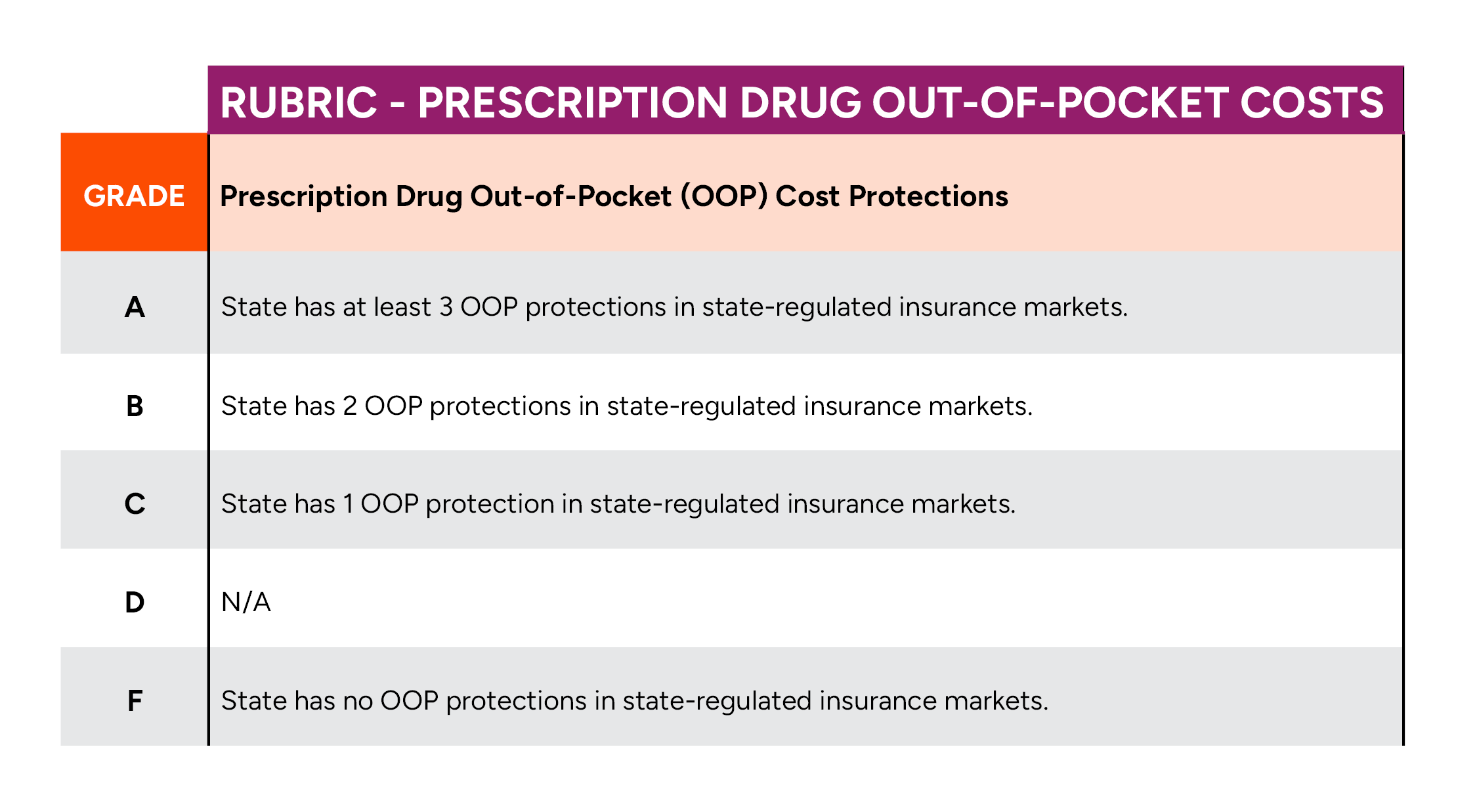
Click to enlarge.
Please complete this form to access the requested resource.