

Understanding Rare Diseases and Finding a Diagnosis
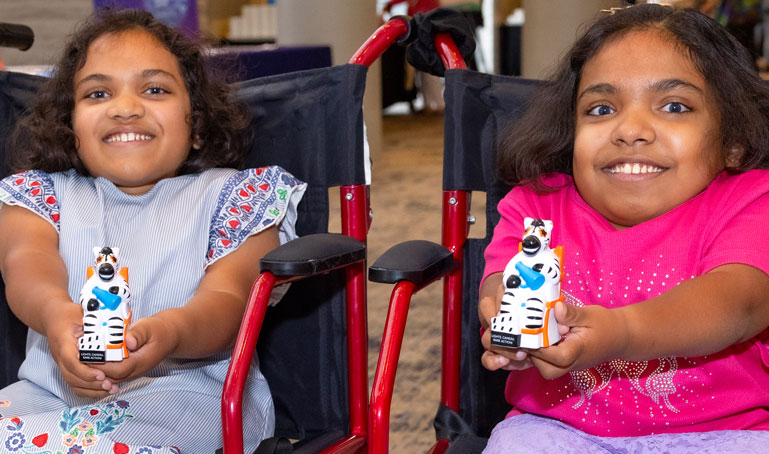
A rare disease is a condition that affects fewer than 200,000 people in the United States. While each rare disease is uncommon, rare diseases as a group are not. Nearly one in ten or about 30 million people in the United States are living with a rare disease. Most rare diseases are caused by changes in genes (called genetic causes), and many begin in childhood.
Diagnosing a rare disease can be challenging and often takes time. Many rare diseases are not well known, and only a small number of doctors may have experience with a specific condition. Symptoms may appear slowly, change over time, or look like more common illnesses. Because of this, doctors usually need to rule out common conditions first. This careful step-by-step process is important, but it can delay getting the correct diagnosis.
Delays are common and do not mean your concerns were missed or that anyone did something wrong.
Parents are often the first to notice that something is not quite right. Your child may have symptoms that are hard to explain or do not improve with usual treatments. Finding answers may involve many visits, tests, and referrals to specialists. Doctors sometimes call this process a diagnostic odyssey, which means a long and sometimes frustrating search for a diagnosis.
For some children, a diagnosis is found quickly. For others, it may take months or years, and some children may remain without a clear diagnosis even after extensive testing. While not all rare diseases can be diagnosed today, medical knowledge and testing continue to improve, and more children are being diagnosed each year.
This guide will help you understand why finding a diagnosis can be difficult, what steps may come next, and how to work closely with your child’s primary care professional (PCP) and care team as you look for answers.
Where Are You Right Now?
If you are just starting to look for answers: This guide can help you understand what steps may come next and how to talk with your child’s PCP about your concerns.
If your child was recently diagnosed: This guide can help you learn more about the condition, build a care team, and find support and resources for your family.
If your child is still undiagnosed: This guide can help you understand why diagnosis can take time and what options may still be available.
As a parent or caregiver, you may sense that something is not quite right with your child’s health, growth, or development, even if you are not sure why. Many rare diseases first show signs in infancy or childhood. Some signs may be noticed before birth, while others appear later in childhood, the teen years, or even adulthood.
It is important to know that many of the signs and symptoms listed below are not unique to rare diseases and are often caused by more common conditions. Doctors usually check for common causes first. Sometimes, though, a pattern of signs may lead your child’s primary care professional (PCP) or a specialist to think a rare disease could be part of the cause.
Examples of signs and symptoms that doctors may look for when deciding if more testing for a rare disease could be helpful:
-

Concerns found on an ultrasound during pregnancy, such as slow growth, parts of the body not forming as expected, or low amniotic fluid -

Major differences noticed at birth or shortly after (sometimes called birth defects) that affect how more than one part of the body looks or works, such as a heart defect, cleft palate, very large or small head size, or problems urinating -
Abnormal newborn screening test results -

Feeding problems, such as trouble swallowing, difficulty breastfeeding, poor appetite, or overeating -

Differences in development, such as walking or talking later than expected, or losing skills a child had already learned -

Seizures, especially if they happen often, without a clear cause, or are hard to control -

Social or behavioral differences, such as limited eye contact, difficulty interacting with others, frequent distress or crying, or a diagnosis of autism -

Differences in growth, such as growing much slower or faster than expected, or one part of the body growing out of proportion to the rest -

Medical problems that affect more than one part of the body -
Health problems that begin early in life or continue to worsen over time -

Illnesses that are unusually frequent, severe, long-lasting, or do not improve as expected with treatment -
A family history of similar, unexplained symptoms
If your child has one or more of these signs or symptoms or you have other concerns about your child’s health or development, this guide will help you learn how to work with your child’s PCP to take next steps. It will also help explain common medical terms and testing that doctors may use as they work to understand what is causing your child’s symptoms.
Talk with your child’s primary care professional (PCP)
If you feel that something is not right with your child’s health, growth, or development, contact your child’s PCP. A PCP may be a pediatrician, family doctor, or internal medicine doctor. It may also be a nurse practitioner (NP) or physician assistant (PA). PCPs can examine your child, order tests, make diagnoses, and prescribe medicines.
Sharing your concerns with your child’s PCP is an important first step. A PCP who listens to you and knows your child well can help decide what testing is needed, make referrals, and support your family as you look for answers.
Take your child to regular checkups to watch development
Regular checkups give you time to talk with your child’s PCP about how your child is growing and learning. This includes milestones such as smiling, sitting, walking, talking, learning in school, and social skills.
At these visits, share when your child reached certain milestones and bring up any concerns. Every child develops at their own pace, but if development is outside the expected range, it may signal a health or developmental concern that needs further evaluation.
Stay in touch with your child’s PCP and care team
Keep your child’s PCP informed about any new symptoms or changes you notice. Even small changes can help guide next steps. Your child’s PCP is often the best person to help coordinate care, especially if your child needs to see more than one doctor.
Work with your child’s PCP to see specialists
If your child’s PCP thinks a rare condition might be possible, your child may need to see a specialist. A specialist is a doctor with extra training in one area of medicine, such as genetics, neurology (brain and nerves), heart, or kidneys. Some specialists focus even more closely on a specific area; these are sometimes called sub-specialists.
Talk with your child’s PCP about which specialists may be helpful. Because rare diseases are uncommon, not all specialists have experience with them. Your PCP can help find specialists who are more familiar with rare conditions.
Consider a NORD Rare Disease Center of Excellence
Finding doctors with experience in rare diseases can be difficult. Many community specialists do diagnose rare diseases, but if answers are still not found, your child’s PCP may suggest referral to an academic medical center. This may include a designated NORD Rare Disease Center of Excellence, which is a hospital recognized for its experience in diagnosing, caring for, and studying many rare diseases.
NORD Rare Disease Centers of Excellence bring together teams of experts who work across specialties and may offer testing or evaluations not available elsewhere.
Make notes about your child’s development, symptoms, and illnesses
Keeping a simple record of your child’s health can help you and your child’s care team see patterns over time. You may want to write down changes in development, behavior, and eating habits. When your child is sick, note their symptoms and how long they last. It can also help to write down whether other family members, friends, or classmates were sick at the same time.
Keep copies of your child’s medical records
Many doctors and hospitals use electronic health records, but records are not always shared between systems. This means your child’s PCP or specialist may not be able to see all test results or visit notes. Keeping your own copies can be very helpful. Save important records, such as test results, clinic notes, and hospital discharge papers, either on your phone, computer, or as printed copies. Bring these with you when seeing a new doctor or specialist, or if your family moves or changes health systems. In many cases, parents are the best source for sharing a child’s complete medical history.
Work with your child’s PCP and care team to create a health summary
If your child has many medical records or a complex medical history, you may ask your child’s PCP or another member of the care team to help create a short health summary. This summary may include a timeline of symptoms, doctors already seen, current treatments, and key test results.
Specialist visits are often short, so having a summary can help the doctor quickly understand your concerns and focus on next steps.
Health Summary Templates developed by the Undiagnosed Rare Diseases Network International can help your child’s PCP write the summary. There is also a template you can use to write a short medical story for your child.
Find supportive resources
Caring for a child while searching for answers can feel overwhelming. You may also be facing financial stress, school concerns, or feeling isolated. This guide includes resources that may be helpful. You can also talk with your child’s PCP or your own PCP about finding support from a therapist, counselor, or medical social worker.
Make connections
Many parents find it helpful to connect with other families who are also searching for answers or living with a rare disease. NORD offers events and programs where families can meet and share experiences. NORD newsletters also provide updates about rare disease news, research, events, and helpful resources for families.
If your child’s care team suspects a specific rare disease, you may also want to connect with a patient advocacy or support group for that condition. Many groups welcome families who are still seeking a diagnosis. You can search for rare disease groups in NORD’s Organizational Database.
Why a Diagnosis Matters
Getting a diagnosis can help your child get the right care, including access to specialists, care plans, and health checks over time.
A diagnosis can also help you connect with other families, learn what to expect, and explore research or clinical trial options if you choose.
Even when answers are limited at first, a diagnosis can still matter. As more children are diagnosed, doctors learn more and care continues to improve.
Testing for Rare Diseases
Your child’s care team will help decide which tests, if any, make sense for your child. Not every test is right for every child or every rare disease. Testing is chosen based on your child’s symptoms, medical history, and exam findings.
Talk with your child’s PCP or specialists about testing options. Ask which tests your child has already had, what the results showed, and whether more testing may be helpful. Before starting new testing, it is also important to confirm that your child had newborn screening and if any follow-up was needed.
The next sections are brief overviews of common types of tests doctors may use when trying to understand a child’s health concerns.
Biochemical tests look at substances in the blood or urine to see how the body uses food to make energy, grow, and stay healthy. These tests can sometimes help doctors find problems with how the body processes sugars, fats, or proteins.
Examples of biochemical tests include blood and urine tests such as a comprehensive metabolic panel, ammonia, lactate, or pyruvate levels, plasma amino acids, urine organic acids, and acylcarnitine profiles. Your child’s care team will decide if any of these tests are appropriate based on your child’s symptoms.
Imaging tests allow doctors to look inside the body. These tests help check whether organs and body structures, such as the brain, heart, lungs, bones, or kidneys, are formed and working as expected.
Common imaging tests include X-rays, ultrasound, and MRI. Each type of imaging shows the body in a different way. Imaging is usually low risk and is ordered only when it may provide useful information for your child’s care.
Genetic testing is often an important part of looking for the cause of a rare disease. Genes are like instructions that tell the body how to grow, develop, and work.
Each person has 23 pairs of chromosomes in almost every cell of our body. One copy of each pair comes from a person’s biological mother and the other from their biological father. Chromosomes are made of DNA, which can be thought of as a long string of letters. These letters form about 22,000 genes. Genes are like short sets of instructions that tell the body how to make proteins, which are needed for the body to grow and function.
Everyone’s genetic code is unique. Many genetic differences are normal and do not cause health problems. However, some variants (changes or misspellings in the genetic code) can affect health or development.
Doctors use different types of genetic tests to look for changes that may help explain a child’s symptoms. Not every test is right for every child. Your child’s care team will recommend testing based on your child’s signs, symptoms, and medical history.
NORD Educational Resources: Genetic Testing
(Available in English and Spanish)
A microarray test looks for extra or missing pieces of genetic material in your child’s DNA. These pieces may be small or large. Having too much or too little genetic material can sometimes cause medical or developmental differences, depending on which genes are involved.
Chromosome and fluorescence in situ hybridization (FISH) analysis
Chromosome testing (karyotyping) looks at the overall structure of chromosomes to see if large pieces are missing, extra, or rearranged.
FISH (fluorescence in situ hybridization) is a more targeted test that checks how many copies of a specific gene or chromosome region are present and where they are located.
Panel, exome, and genome sequencing
Panel, exome, and genome sequencing look closely at the “spelling” of genes:
- Panel tests examine selected genes linked to certain types of conditions.
- Exome sequencing looks at almost all genes in the body.
- Genome sequencing looks at nearly all genes and the DNA between them.
These tests are more detailed and may be used when earlier testing does not provide clear answers.
Genetic test results can be complex. A genetic counselor or genetic doctor will usually review the results with you and explain what they mean for your child and family.
Results are often described as:
- Positive One or more variants (changes) in the genetic code were found that are known or very likely to cause disease. This usually confirms a genetic diagnosis and can help guide care and planning. Sometimes, family members may also be offered testing.
- Negative No genetic change was found that explains your child’s symptoms. This does not always mean the condition is not genetic. It may mean that current testing or knowledge cannot yet find the cause.
- Uncertain (Variant of Uncertain Significance, or VUS) A genetic variant was found, but doctors do not yet know if the variant causes disease. More information, such as time, new research, or testing other family members, may help clarify this later. In general, making medical decisions based on a VUS is not recommended.
- Carrier Results Sometimes testing shows that a child or parent carries one copy of a disease-causing genetic variant but does not have the disease, because for the associated disease to cause symptoms, a person would need a disease-causing variant in both copies of the gene. Carriers are usually healthy but can pass the change to their children. Their child would not develop that disease unless the other biological parent passed on a disease-causing variant for the same disease. In these cases, carrier testing for the other biological parent can be considered.
There is no single genetic test that can find all rare genetic diseases. Some children may need more than one test over time. Even with the most advanced testing available today, a genetic cause is found in only about 25–50% of children being evaluated.
This can be frustrating, but it does not mean testing was a failure. Science continues to improve, and results may become clearer in the future. And some rare conditions are not genetic and may be caused by infections, injuries, or environmental factors.
Your child’s care team, and often a genetic counselor, can help you understand next steps and what results may mean for your child and family.
Caring for Your Child After a Rare Disease Diagnosis
Continue your child’s routine care
After a rare disease diagnosis, your child’s primary care professional (PCP) remains an important part of the care team. Your child’s PCP will often work together with specialists to help manage care. They will continue to treat common childhood illnesses, help coordinate visits with specialists and therapists, and look at your child’s health as a whole.
If your child has not yet seen a specialist who has experience treating other children with the same rare disease, or if your child needs complex care, your PCP or local specialist may help find a specialist or clinic with that expertise. This may include a referral to a NORD Rare Disease Center of Excellence or another major academic medical center. When possible, specialists at these centers can work with your local doctors so your child can receive the best care close to home.
Learn more about your child’s rare disease
Learning about a rare disease can feel overwhelming. A good first step is to talk with your child’s PCP and care team, especially the specialist who made the diagnosis. If the condition is genetic, a genetic counselor can help explain the diagnosis and point you to reliable information.
You can also use trusted sources listed in the Resource Guide: Find Reliable Information section. Be cautious when searching online. Always talk with your child’s PCP or specialists before trying any treatments or advice you find on social media or online forums.
If you read medical articles about your child’s condition, share them with your child’s care team. Keep in mind that many published case reports describe the most severe or unusual cases, which may not reflect your child’s experience.
Build a network of support
Caring for a child with a rare disease can affect every part of your life. You may be balancing medical appointments, caring for other family members, working, and managing stress, worry, or financial strain. Feeling isolated is common.
Connecting with other families facing similar challenges can provide emotional support and practical advice. Rare disease patient advocacy, nonprofit support groups can also help families share resources and learn from one another. You can find support groups and services in the Resource Guide: Connect to Support section.
Family and friends often want to help but may not know how. Letting them know what you need, such as meals, childcare, errands, or time to talk, can help build a strong support network for you and your family.
Manage expectations and care for yourself
Because rare diseases are uncommon, there may be limited information about how a condition progresses or how best to treat it. Some rare diseases have no cure, and treatments may focus on managing symptoms rather than stopping the disease.
Even so, having a diagnosis can be very valuable. It can help your child access services, connect you with other families, open doors to research, and guide future care as new treatments become available.
Caring for a child with a rare disease can be exhausting. Try to care for your own physical and emotional health. If you feel overwhelmed, ask your PCP about mental health support. If you have other children, make time for them as well, and accept help when it is offered.
Consider joining a rare disease registry
Many rare disease organizations collect information from families through registries. Some registries simply help families stay connected and receive updates. Others are research registries that collect information over time about symptoms, treatments, and quality of life.
These registries help researchers and doctors better understand rare diseases, identify gaps in care, and plan future studies or clinical trials. Participation is usually optional, and registries should clearly explain how your child’s information will be used and protected.
Talk with your child’s care team about research and clinical trials
Research studies and clinical trials may offer testing, monitoring, or treatments that are not widely available. While participation may not directly benefit your child, it can help researchers learn more and support future families. The National Institutes of Health (NIH) Clinical Research Trials and You website provides information that can help you learn more about clinical trials, including The Basics and For Parents and Children.
Not all rare diseases have clinical trials, but options may change over time. Talk with your child’s PCP or specialists before enrolling in any study. You can also explore opportunities through:
Your child’s care team can help you understand whether a study may be appropriate for your family.
Moving Forward Without a Diagnosis
Be patient, but keep going
Sometimes a clear answer is not found, even after many tests and visits with specialists. This does not mean the search is over. For some children, finding a diagnosis takes months or even years.
Keep working with your child’s primary care professional (PCP) and specialists to manage symptoms and support your child’s health while you continue looking for answers. Treatment and care can still move forward, even without a final diagnosis.
Stay alert for new information
The human body and our genes are very complex, and doctors are still learning new things. A genetic test that does not give an answer today may become helpful in the future as science advances.
If your child has had exome or genome sequencing, ask the genetics team about re-reviewing the results. Re-analysis may be helpful if new symptoms appear or every few years, as new gene–disease links are discovered. Some results may also be useful later in life by showing risks for other health conditions.
Learn about undiagnosed disease programs
If your child has had extensive testing and still does not have a diagnosis, research programs may be an option. Many NORD Rare Disease Centers of Excellence offer research-based undiagnosed disease programs that use advanced testing not always available in routine care. Testing in these programs is often paid for by the study.
Some programs accept referrals directly from families or doctors. Others are part of the Undiagnosed Diseases Network (UDN), a national research program initially supported by the National Institutes of Health (NIH), which uses a central application process.
Talk with your child’s PCP, specialist, or genetic counselor about whether a research program may be right for your child.
Insurance Tips
Health insurance can be hard to understand, especially when your child needs many appointments, tests, or treatments. Staying in close contact with your insurance company can help you avoid surprises and plan ahead.
Helpful steps to take:
- Check what your insurance covers before appointments, tests, or treatments are scheduled.
- Ask if medications, medical tests, referrals, or treatments must be ordered by your child’s PCP or a specific specialist to be covered.
- Request a “test claim” to estimate whether something will be covered and what your out-of-pocket cost may be.
- Ask if referrals must always come from your child’s PCP or if certain tests (such as genetic tests) must be ordered by a specialist.
If costs are too high, talk with your child’s PCP or specialist right away. It may be possible to:
- See a different specialist who is in your insurance network
- Use a different medication, test, pharmacy, or testing center
- Find financial assistance programs that may help cover costs
If your insurance company denies coverage for a medication, test, treatment, or referral:
- Contact the office of the PCP or specialist who ordered it
- Ask about prior authorization or appealing the decision
- The clinic staff can often help contact the insurance company on your behalf
When speaking with your insurance company:
- Write down the date of the call, the name of the person you spoke with, and what was decided
- Ask questions if something is unclear—insurance language can be confusing
- Check the status of claims and follow up if payment is delayed
You are not expected to understand everything right away. Asking questions and keeping good records can help you advocate for your child and manage costs more effectively.
Resource Guide: Find Reliable Information
Learning about a rare disease can feel overwhelming. Not all information online is accurate or easy to understand. The resources below are trusted sources that can help you learn more about your child’s condition and share reliable information with your child’s primary care professional (PCP) and care team.
NORD Rare Disease Database
The NORD Rare Disease Database offers information on more than 10,000 rare diseases. It includes links to trusted medical resources such as GeneReviews, Orphanet, OMIM, and MedlinePlus Genetics (also described in this section).
The database also includes over 1,500 NORD Rare Disease Reports in English and more than 750 in Spanish. These reports:
- Are written to be more family-friendly than many medical websites
- Explain signs and symptoms, causes, how conditions are inherited, and how diagnoses are made
- Describe standard treatments, ongoing research, and clinical trials
- List patient advocacy and support groups
- Are written or reviewed by medical experts
Many families use NORD Rare Disease Reports as a starting place when learning about a rare disease diagnosis.
NORD Rare Disease Video Library
The Rare Disease Video Library offers short educational videos in English and Spanish about rare diseases and related topics. These videos are made for patients, caregivers, doctors, students, and the general public. You can find videos that explain how rare diseases are diagnosed, what patient registries are, how research works, and stories from families and experts. The videos are available on NORD’s YouTube channel, where you can watch recordings about rare disease facts, genetic testing, clinical trials, and more.
NORD Support Helpline
NORD Support Helpline connects patients and families with NORD’s Information and Resource Services team, offering guidance on a wide range of rare disease–related concerns. Support is available via phone or email, and a dedicated assistance line is offered for Spanish-speaking patients and families. Helpline specialists provide reliable information, help navigate available services, and connect callers to appropriate resources, advocacy groups, and support programs.
GeneReviews®
GeneReviews provides detailed information about genetic conditions, including how they are diagnosed, managed, and inherited. The information is written mainly for doctors, but many parents find it helpful—especially when shared with their child’s PCP or specialists.
Each GeneReviews chapter is written and reviewed by experts. There are more than 800 chapters covering specific genetic conditions. GeneReviews is managed by the University of Washington.
MedlinePlus® Genetics
MedlinePlus Genetics offers easy-to-understand information about genetic conditions, genes, and basic genetics concepts. The content is written in clear, family-friendly language and includes links to trusted resources.
MedlinePlus is provided by the National Library of Medicine, part of the National Institutes of Health (NIH).
Online Mendelian Inheritance in Man (OMIM®)
OMIM summarizes published research about genetic diseases and the genes linked to them. It focuses on how genetic changes relate to symptoms. This resource is written mainly for doctors and researchers, but some parents find it useful when reviewing information with their child’s PCP or genetic specialist.
OMIM is authored and edited at the McKusick-Nathans Institute of Genetic Medicine, Johns Hopkins University School of Medicine, under the direction of Ada Hamosh, MD, MPH.
Orphanet
Orphanet provides information on more than 6,000 rare and genetic diseases. It is designed to support diagnosis, care, and research. Some materials are available in languages other than English. Although much of the content is written for healthcare professionals, parents may find it helpful, especially when shared with their child’s care team.
Orphanet is based in Europe and funded by the French National Institute for Health and Medical Research and the Health Programme of the European Union.
Resource Guide: Connect to Support
Finding support can make a big difference as you care for a child with a rare disease. NORD offers several resources to help you connect with information, services, and other families.
NORD’s Organizational Database
The NORD Organizational Database helps you find nonprofit rare disease patient support and advocacy groups. You can search by disease name or browse related conditions.
Patient support groups may:
- Share information about a rare disease in family-friendly language
- Connect you with other families facing similar challenges
- Offer or link to support services and assistance programs
- Share updates about research studies and clinical trials
- Provide lists of specialists or expert care centers
Some groups focus on one specific rare disease, while others support families with related or similar conditions.
NORD State Resource Center
The NORD State Resource Center lists state-specific programs that offer free or low-cost services for people affected by rare diseases. These programs may help with medical care, education, transportation, or other needs.
NORD RareCare® Patient Assistance Programs
NORD RareCare offers help to patients and families who need assistance paying for medical bills, traveling to a treatment center, or participating in clinical trials. NORD also offers support for parents/caregivers through our Caregiver Respite Program and helps cover costs associated with educational programs and conferences.
- Search NORD RareCare Patient Assistance Programs Database (many of the programs are disease-specific, but new programs are added as funding allows)
- Apply for NORD Caregiver Respite, which helps caregivers take a short break or attend an educational event
- Apply for NORD Rare Disease Educational Support Program, which helps families attend rare disease conferences and learning opportunities
NORD Events
NORD Events offer chances to connect with other families affected by rare diseases. Events may be in person or online and often include education, support, and community building. You can learn about upcoming events by signing up for NORD newsletters or visiting the NORD events page.
NORD RareLaunch®
If there is no patient support group for your child’s rare disease, NORD RareLaunch® offers guidance and tools to help families start and grow a nonprofit rare disease organization. Many patient groups begin with parents looking for connection and support.
Facebook or other social media support groups
If no formal patient support group exists, social media groups (such as Facebook groups) may offer connection and shared experiences. These groups are often started by parents of children with the same condition.
If you join a social media group:
- Remember that shared experiences are not medical advice
- Always check treatment or care suggestions with your child’s PCP or care team
- Be cautious about sharing personal or medical information
If you cannot find a group, you may choose to start one, such as by creating a private Facebook group for families affected by the same condition.
NORD Support Helpline
Please call NORD at 1-800-999-6673 or email us at [email protected].
Si deseas hablar con alguien en espanol por favor llame al 1-844-259-7178 para asistencia.
Selected Published Medical Articles
- Crossnohere, N.L., Armstrong, N., Fischer, R., & Bridges, J.F.P. (2022). Diagnostic experiences of Duchenne families and their preferences for newborn screening: A mixed-methods study. American journal of medical genetics. Part C, Seminars in medical genetics,190(2):169-177. https://doi.org/10.1002/ajmg.c.31992
- Crowe, A., McAneney H., Morrison, P.J., Cupples, M.E., & McKnight, A.J. (2020). A quick reference guide for rare disease: supporting rare disease management in general practice. The British journal of general practice: the journal of the Royal College of General Practitioners, 70(694):260-261. https://doi.org/10.3399/bjgp20X709853
- Deuitch, N. T., Beckman, E., Halley, M. C., Young, J. L., Reuter, C. M., Kohler, J., Bernstein, J. A., Wheeler, M. T., Undiagnosed Diseases Network, Ormond, K. E., & Tabor, H. K. (2021). “Doctors can read about it, they can know about it, but they’ve never lived with it”: How parents use social media throughout the diagnostic odyssey. Journal of genetic counseling, 30(6), 1707–1718. https://doi.org/10.1002/jgc4.1438
- Elliott, E. & Zurynski, Y. (2015). Rare diseases are a ‘common’ problem for clinicians. Australian family physician, 44(9):630-3. https://pubmed.ncbi.nlm.nih.gov/26488039/
- Hulick, P.J. (2023). Next-generation DNA sequencing (NGS): Principle and clinical applications. UpToDate. Retrieved December 5, 2023. https://www.uptodate.com/contents/next-generation-dna-sequencing-ngs-principles-and-clinical-applications
- Kenny, T., Bogart, K., Freedman, A., Garthwaite, C., Henley, S.M.D., et al. (2022). The importance of psychological support for parents and caregivers of children with a rare disease at diagnosis. Rare disease orphan drugs, 1, 7. https://dx.doi.org/10.20517/rdodj.2022.04
- Marwaha, S., Knowles, J. W., & Ashley, E. A. (2022). A guide for the diagnosis of rare and undiagnosed disease: beyond the exome. Genome medicine, 14(1), 23. https://doi.org/10.1186/s13073-022-01026-w
- Miller, D. T., Lee, K., Abul-Husn, N. S., Amendola, L. M., Brothers, K., Chung, W. K., …, & ACMG Secondary Findings Working Group. ACMG SF v3.2 list for reporting of secondary findings in clinical exome and genome sequencing: A policy statement of the American College of Medical Genetics and Genomics (ACMG). Genetics in medicine : official journal of the American College of Medical Genetics, 25(8), 100866. https://doi.org/10.1016/j.gim.2023.100866
- Quaio, C.R.D.C, Obando, M.J.R., Perazzio, S.F., Dutra, A.P., Chung, C.H., et al. (2021). Exome sequencing and targeted gene panels: a simulated comparison of diagnostic yield using data from 158 patients with rare diseases. Genetics and molecular biology, 44(4), 20210061. https://doi.org/10.1590/1678-4685-gmb-2021-0061
- Rodan, L. H., Stoler, J., Chen, E., Geleske, T., & Council on Genetics (2025). Genetic Evaluation of the Child With Intellectual Disability or Global Developmental Delay: Clinical Report. Pediatrics, 156(1), e2025072219. https://doi.org/10.1542/peds.2025-072219
- Seaby, E.G., Pengelly, R.J., & Ennis, S. (2016). Exome sequencing explained: a practical guide to its clinical application. Briefings in functional genomics, 15(5), 374–384. https://doi.org/10.1093/bfgp/elv054
- Vandeborne, L., van Overbeeke, E., Dooms, M., De Beleyr, B., & Huys, I. (2019). Information needs of physicians regarding the diagnosis of rare diseases: a questionnaire-based study in Belgium. Orphanet journal of rare diseases, 14(1), 99. https://doi.org/10.1186/s13023-019-1075-8