

Summary
Essential thrombocythemia, or ET, is a rare blood condition. Most people with ET have a normal life expectancy, even when the disease is diagnosed at a younger age and is managed appropriately.
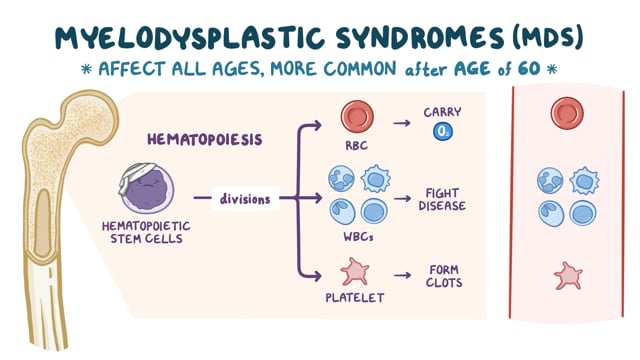
People with ET have an increased number of platelets in their blood. Platelets are the smallest of the three main types of circulating blood cells and play an important role in helping the blood clot after an injury. The other two types of blood cells are red blood cells, which carry oxygen to tissues throughout the body, and white blood cells, which help the body fight infections.
In ET, red blood cell and white blood cell numbers are generally normal. All blood cell numbers are measured by a simple blood test, which counts the number of each type of blood cell separately. In addition, because the red cells comprise the bulk the blood cells in the circulation, they are also measured by calculating the percentage of the total volume of blood that the red cells occupy. This measurement is called the hematocrit, which indicates the percentage of the blood made up by red cells. Normally, the red cells occupy 38-45% of the circulating blood depending on whether the hematocrit is being measured in women or men; the rest of the blood volume consists of the plasma. White blood cells and platelets are much smaller that red cells are normally present in much lower numbers and occupy a very tiny percentage of the blood volume.
It is important to know that most people who have a high platelet count do not have ET. Platelet counts can be elevated for many other reasons, including iron deficiency, infection, inflammation, other cancers, certain bone marrow conditions, or having had the spleen removed. Rarely, some inherited conditions can cause high platelet counts, which are usually harmless.
In ET, the focus is on distinguishing it from these other, more common causes of high platelets. Treatment focuses on relieving symptoms related to the elevated platelet count and reducing the risk of bleeding, since very high platelet counts are mainly associated with bleeding rather than blood clots in large blood vessels. Some doctors also consider reducing the risk of blood clots as part of overall care, particularly in patients who have other cardiovascular risk factors.
Introduction
ET is one of three blood conditions known as myeloproliferative neoplasms (MPNs). These conditions share certain features, including the overproduction of normal blood cells, red cells, white cells, and platelets, alone or in various combinations. They may also involve scarring in the bone marrow or an enlarged spleen.
These shared features exist because all three MPNs are caused by specific genetic changes (called driver variants) in genes known as JAK2, CALR, and MPL. These variants arise in hematopoietic stem cells (HSCs), which are the cells in the bone marrow responsible for producing all blood cells. The variants are called “gain of function” because they cause the stem cells to produce too many normal blood cells. Although these conditions are called “neoplasms” (a term usually associated with cancer), the blood cells they produce are normal, they are simply made in excess.
The other two MPNs are polycythemia vera (PV), in which the body makes too many red blood cells, white blood cells, and platelets, and primary myelofibrosis (PMF), in which scarring develops in the bone marrow. Both ET and PV can develop some degree of bone marrow scarring over time, but it is usually milder than in PMF. Transformation to acute leukemia is uncommon in ET and PV unless the patient has been exposed to chemotherapy. The genetic changes involved in an ET transformation to AML are different from those seen in PMF.
For the adequate management of ET is essential to make sure that the diagnosis is correct, specifically to rule out polycythemia vera (PV), due to several reasons:
Finally, it must be emphasized that a very high platelet count is not associated with a risk of major vessel blood clots (thrombosis) but, rather, if the platelet count is greater than 900,000/mL, there is a risk of bleeding.
Please complete this form to access the requested resource.