

By Kathryn Blalock
My story began with a fight to survive from the very moment I was born.
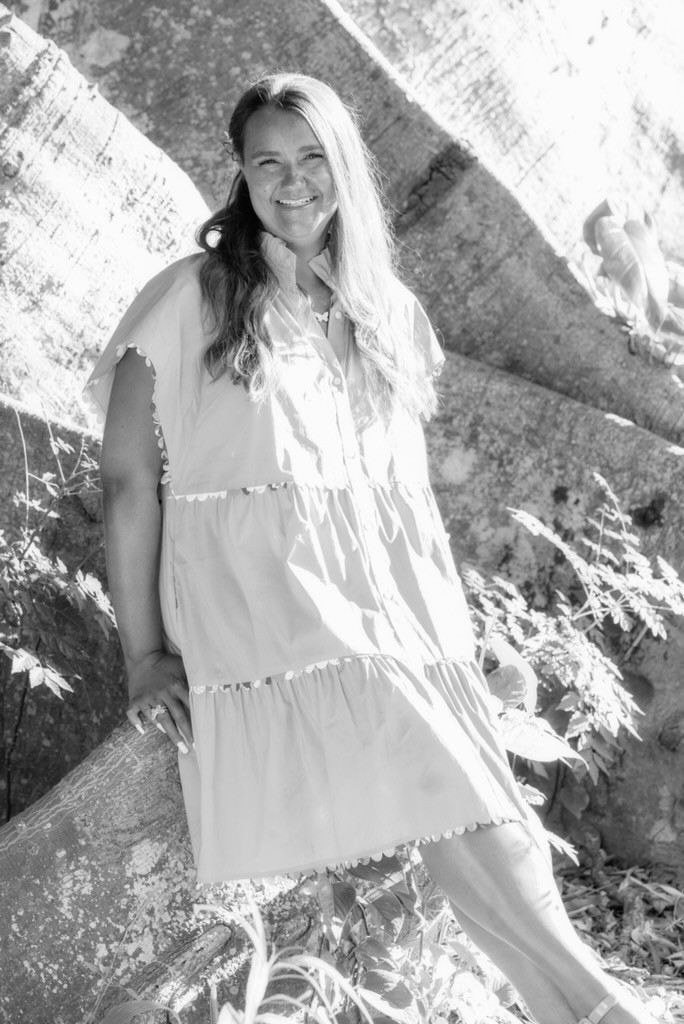
I was born with severely enlarged kidneys and polydactyly and was not expected to survive. After years of unanswered questions, I was finally diagnosed at age five with Bardet-Biedl Syndrome (BBS), a rare genetic condition that affects multiple systems of the body.
BBS has impacted nearly every part of my life, from kidney disease, obesity, and constant hunger to obsessive-compulsive disorder (OCD) and vision loss that ultimately led to blindness. I developed night blindness as a toddler, and from there my vision progressively declined over time. Today, I only have a very narrow field of vision; I have no peripheral vision and in my central vision it’s like looking through a straw.
Even the simplest tasks can be overwhelmingly hard now. As a girl who loves fashion, putting together an outfit can be difficult. Doing my hair or makeup often requires asking for help, which can be frustrating because I have to rely on someone else’s eyes instead of my own. However, I am proud to say I have learned to adapt in many ways.
I also live with severe OCD, suffering from many fears related to contamination. Being mostly blind with contamination OCD was terrifying because I couldn’t fully see what I might be touching, and the fear of the unknown was overwhelming. I was not just battling OCD — I was battling it without being able to trust my own eyes. It felt like a double whammy.
At my worst, OCD consumed nearly every aspect of my life, and the fear of contamination became debilitating, trapping me in endless compulsions, rituals, and fear. My world became smaller and smaller. Yet, even in the hardest moments, I refused to give up.
Eventually, I knew I needed help, but finding treatment became another battle. Many programs turned me away because my case was considered too complex. My blindness and OCD together created challenges that many providers were not equipped to handle. Each “no” left me more frustrated and hopeless, and I began to wonder if I would ever find help.
Determination led me to seek treatment at the Neurobehavioral Institute (NBI). The moment NBI said yes to my case, I felt hopeful and relieved that I could finally get the care I so desperately needed.
This began one of the hardest battles of my life. It meant countless hours of exposure therapy, putting myself in the situations I hated most and facing my fears head-on. It meant being willing to sit with anxiety and do the exact opposite of what OCD was telling me to do. Some days, I wanted to throw in the towel, but persevering and sticking with it was beyond rewarding.
One of the biggest challenges, and ultimately one of the biggest victories, was accepting my blindness.
For so long, I had hidden my disability. I was afraid to use my white cane because it made my blindness visible to the world. And my relationship with my cane was even more complicated because of my OCD. My cane represented so many of my fears at once: I was terrified to walk with it and I was convinced it was contaminated, my biggest fear being poop. Instead of continuing to run from all that fear, I began to embrace it.
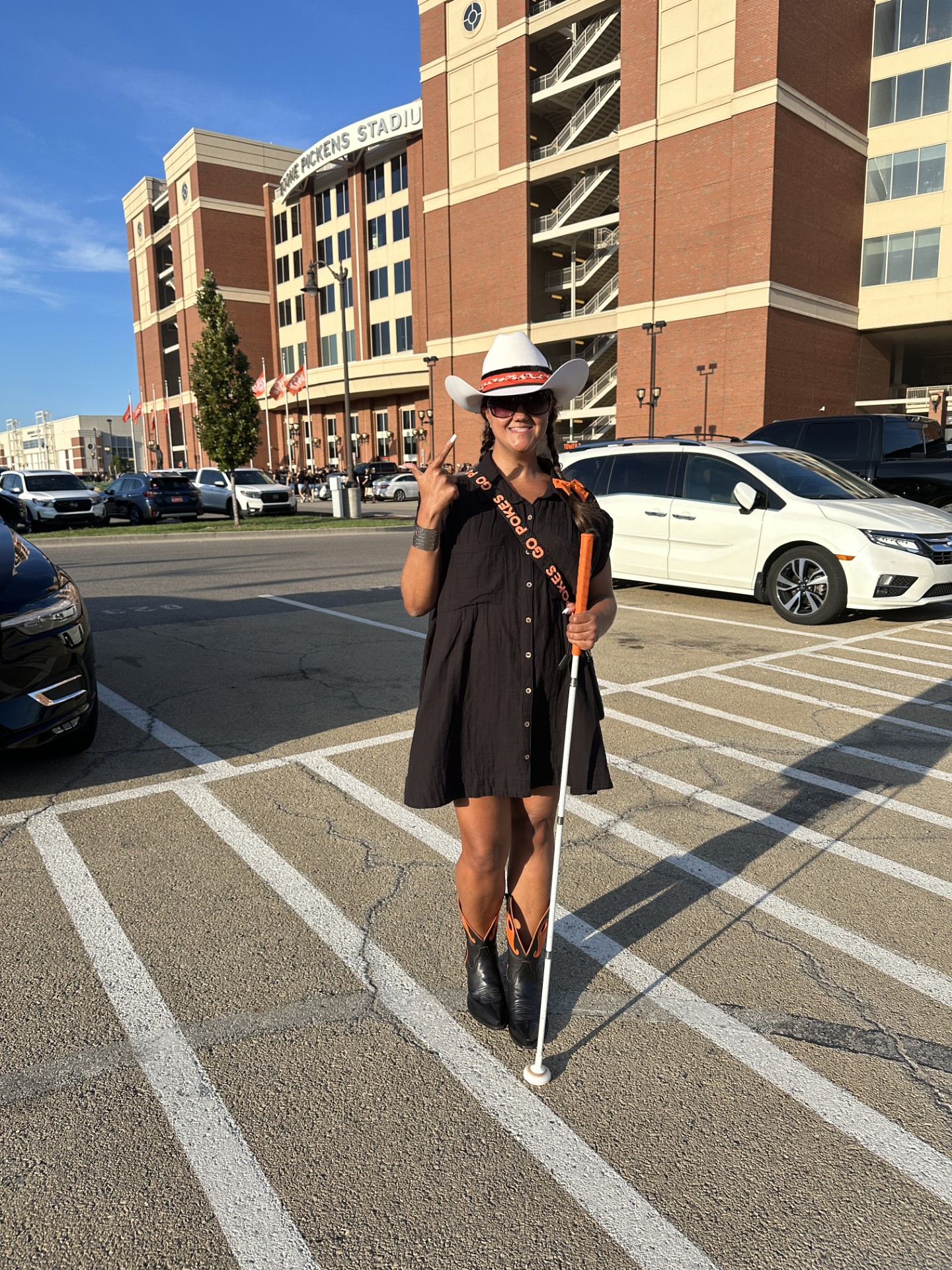 Through treatment at NBI, my mindset began to shift. I became what I call a “super contaminator.” Instead of running from contamination, I leaned into it and faced my fears head-on. The cane I once feared became the very thing that gave me freedom. Another major breakthrough came through horse therapy, where I stopped fearing dirt, germs, and uncertainty and fully embraced them. These were not just small victories, they were life-changing moments.
Today, I still struggle with OCD sometimes, but it no longer controls me. I still live with blindness and a rare disease, but they do not define me. I strive to live life to the fullest every day. I fill my days with boxing, rowing, riding horses, babysitting, volunteering, writing, and working for the Bardet Biedl Syndrome Foundation.
I share my story to show others that a full, meaningful life is possible no matter what hurdles life throws at us. Blindness, BBS, and OCD are parts of my story, but these obstacles do not define who I am or what I am capable of. There is always hope, and with hope, no mountain is too tall to conquer.
Resources:
NORD’s RareCare® Patient Assistance Program for eligible individuals with Bardet-Biedl Syndrome provides financial assistance for BBS-related premiums and copays. Learn more in English or Spanish, apply online here, or email [email protected] for assistance.
Individuals experiencing vision loss or blindness and their loved ones are invited to get connected to our NORD Member, the Foundation Fighting Blindness, at fightingblindness.org. Established in 1971, the Foundation is dedicated to driving research that leads to prevention, treatments, and vision restoration for the spectrum of inherited, degenerative retinal diseases — including BBS — that, together, impact more than 10 million Americans.
To share your own rare disease story with NORD as a patient, caregiver, family member, or medical professional, submit it to us here. While we can’t promise to publish every story we receive, each one is an honor to read.

