

The Grassroots Effort Behind Vermont’s Rare Disease Advisory Council (RDAC)
Vermont has made history! On May 13, 2026, the Vermont Legislature officially passed H.46, a piece of legislation establishing a Rare Disease Advisory Council (RDAC).
A Rare Disease Advisory Council (RDAC) is an official state advisory body established through state law or by a governor’s authority that provides the rare disease community with a formal voice in state government. These councils bring together patients, caregivers, health care providers, researchers, and other stakeholders on a regular basis to identify challenges and develop solutions affecting the state’s rare disease community.
With the passage of H.46, Vermont joined a growing national movement making sure the rare community has a permanent seat in state government.
The rare disease community is incredibly diverse with a unique and complex set of challenges that can be exacerbated by policies that do not reflect the needs of patients and caregivers. RDACs play an important role in state governments by acting as a voice for those affected by rare diseases. Some of the benefits of RDACs include:
- Representation of the rare disease community. RDACs bring together patients, caregivers, medical providers, geneticists, academic researchers, lawmakers and other industry professionals into the same formal body to work together, combining professional expertise with lived experience. These varied backgrounds create a council that is uniquely qualified to address the challenges of rare diseases from all angles.
- Direct policy recommendations to lawmakers. As an official advisory body within state governments, RDACs have a special position that grants them direct access to individuals who are responsible for enacting the policies that shape our lives. Lawmakers rely heavily on the input of these types of councils to help them make informed decisions in their work and trust them to represent the needs of their constituents. Because rare diseases are often invisible to those who are not personally affected by them, an advisory council representing the rare disease community is especially powerful.
- Reporting on rare diseases. In their work representing and making recommendations on behalf of the rare disease community, some RDACs are explicitly tasked in statute with conducting research on the needs of the rare disease community in their state and reporting on the data collected. Through this reporting, RDACs can generate more knowledge about rare diseases, better represent rare disease patients and caregivers in their state, and educate not just lawmakers, but the public at large.
Each RDAC is unique in its structure, membership, and abilities. The newly formed Vermont RDAC is well-suited to represent an estimated 64,000 Vermonters with rare diseases because of design elements specific to the state. For example, RDAC membership will include appointees from Vermont organizations, such as the Vermont Pharmacists Association and the Vermont Medical Society. The RDAC will be housed within the Department of Health, giving it access to the agency’s resources and staff whose work is directly related to the rare disease landscape. The RDAC is also granted a wide range of abilities, including the power to conduct public hearings and receive comments from individuals affected by rare diseases to identify gaps in services in the state.
A Victory Years in the Making
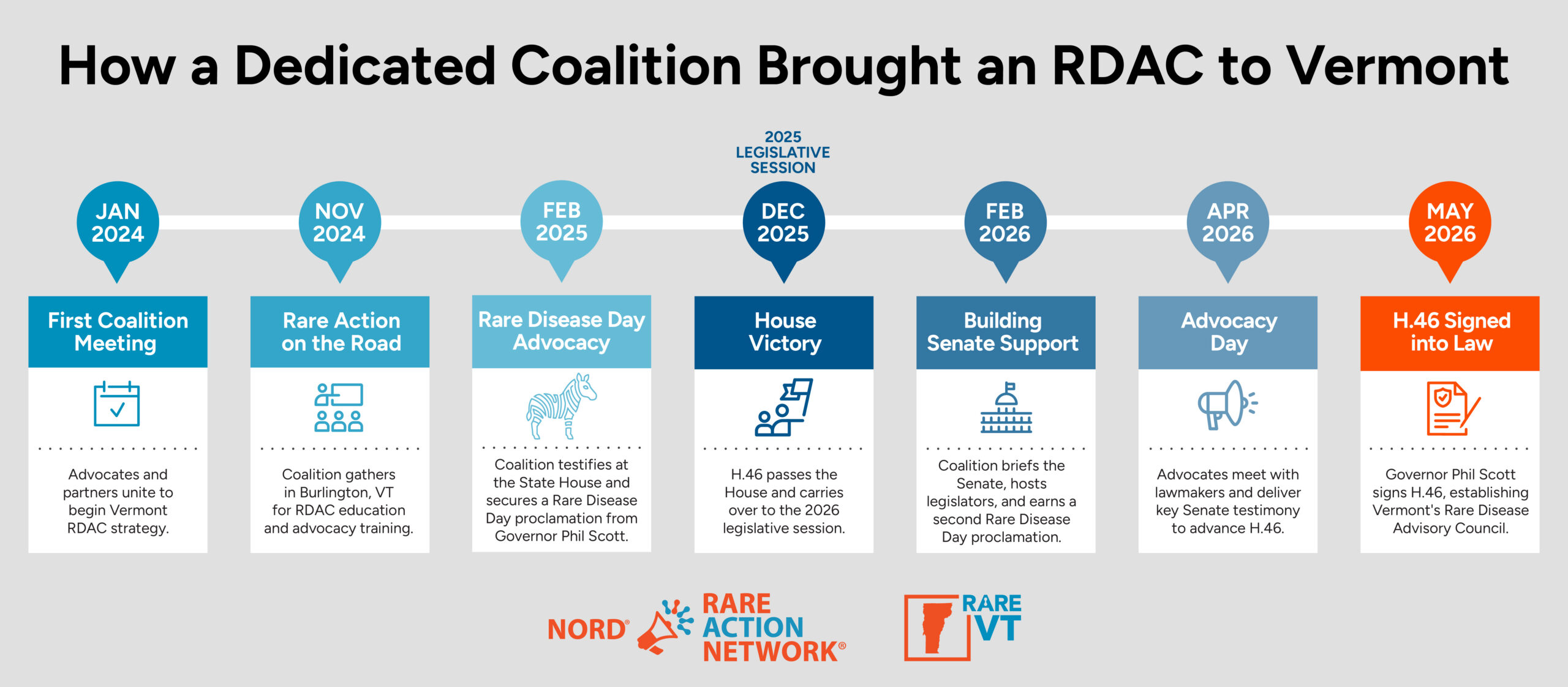
This victory did not happen overnight. It was a multiyear effort driven by the Vermont RDAC Coalition, organized by the National Organization for Rare Disorders (NORD®), a group of patients, families, caregivers, clinicians, and advocacy organizations united by a shared goal: to give Vermonters impacted by rare diseases a formal voice in state government.
Beginning with the coalition’s first meeting in January 2024, NORD collaborated with advocates to develop and execute a coordinated grassroots strategy in support of an RDAC in Vermont. Over the last two years, coalition members have traveled across the state to share their personal stories, provide testimony, meet directly with legislators, participate in advocacy days, and raise awareness through Rare Disease Day® activities.
The coalition’s persistence and sustained effort culminated on May 13, 2026, when Governor Phil Scott signed H.46 into law. The passage of the bill was not the result of a single advocacy day or one pivotal conversation; it was the product of years of consistent engagement, collaboration, education, and relationship-building by coalition members and partners. Together, they demonstrated the power of a dedicated grassroots coalition and secured a formal investment in Vermont’s rare disease community. Click to enlarge image.
Personal Stories that Drove Change
At the heart of this victory are the people who chose to share their experiences with rare disease directly with lawmakers through testimony. Personal testimony has the power to humanize policy issues and transform statistics into real stories that show the impact on individuals, families, and communities. By speaking openly about their experiences, advocates helped lawmakers understand challenges faced by people living with rare diseases and their caregivers, and why having a formal voice in state government is so important.
We asked some of our coalition members to reflect on their experiences testifying in support of H.46, and they told us:
 Sarah E.
“While it seemed daunting to hold the attention, even briefly, of our state’s leaders, giving my testimony on rare disease to the House Human Services committee in February of 2025 was an enriching and empowering experience that reignited the passion for helping others that I’ve always held close to my heart. The encouragement [from the committee] for our participation is something everyone deserves to feel, and I believe it’s important that individuals understand their value in our
communities on every level.”
 Katie P.
“The most memorable part of sharing my testimony was knowing how much I have grown as a person, knowing how much my story could have encouraged someone else, and allowing myself to be vulnerable. I felt nervous before I spoke, but as I spoke, I felt confident and knew how much I had changed. Once I started speaking, most of my fears fell to the side and I felt empowered. My biggest takeaway is that using your voice is powerful and that sharing your testimony is freeing, courageous, and from that we can create connections and inspire others.”
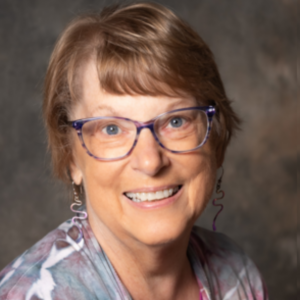 Sharon R.
“Speaking before the Vermont State Senate Health Committee was empowering for me as a person with the rare disease, Pemphigus Vulgaris. My favorite part was when I had finished my two-minute prepared statement, and they said to me, ‘Tell us more.’ So I did!”
Take Action Today
The passage of H.46 shows that sustained grassroots efforts can drive meaningful change. You don’t have to be a policy expert to make a difference. There are so many ways you can lend your time, talent, and voice to support the rare disease community:
- Contact Your Elected Officials: Stay up to date with NORD’s current action alerts. Click here to ask your lawmakers to support crucial rare disease legislation in your state.
- Share Your Story: Did one of NORD’s state policy priorities impact you? Help us build our “Patient Stories” bank for the NORD State Report Card. To share your journey, email [email protected].
- Join the NORD® Rare Action Network® (RAN): Connect with advocates in your local community to help drive state-level policy changes, plan Rare Disease Day events, and ensure our leaders never forget the one in 10 people living with a rare disease. Join the Rare Action Network here.

